


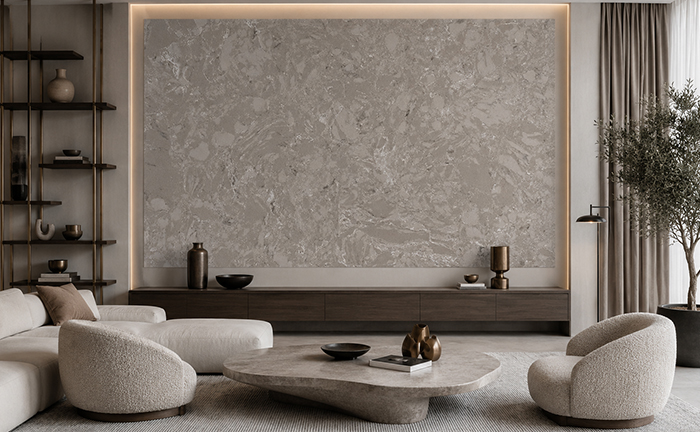
When planning a new space, whether it’s a kitchen, bathroom, or commercial project, one of the biggest decisions you’ll face is choosing between natural stone and engineered stone. Both options are popular, both are beautiful, and both have their strengths. But they’re not the same, and understanding the difference can help you make a much smarter choice.
What Is Natural Stone?
Natural stone is exactly what it sounds like, stone that comes directly from the earth. Materials like marble, granite, and limestone are quarried from natural deposits, then cut and finished into slabs or tiles.
What makes natural stone special is its uniqueness. No two pieces are ever identical. The veining, color variations, and patterns are formed over thousands of years, which gives each slab its own character. That’s why materials like marble are often associated with luxury and timeless design.
Natural stone comes with natural characteristics, they can have crystal lines, water lines, red lines which are often looked at negatively, but they are perfectly natural and normal. Some Natural stones can also be porous which may be a direct conflict with your requirement.
What Is Engineered Stone?
Engineered stone is man-made. It’s created by combining natural stone particles (like quartzite) with resins and pigments. The result is a surface that looks like natural stone but is more uniform in appearance.
One of the biggest advantages of engineered stones is consistency. If you’re working on a large project and want all surfaces to look the same, engineered stones make that easier. It’s also having reduced porosity, which means it resists stains, doesn’t require sealing, and is generally easier to maintain.
On the downside, engineered stones don’t have the same natural variation or depth as real stones. While it can look very similar, it lacks the one-of-a-kind appeal that many homeowners and designers love.
Key Differences to Consider
The most noticeable difference is appearance. Natural stone offers organic beauty and variation, while engineered stone provides a more controlled, uniform look.
In terms of durability, both are strong, but engineered stone tends to be more resistant to stains and scratches due to its non-porous surface. Natural stone, while durable, needs proper care and maintenance.
When it comes to maintenance, engineered stone is the easier option. Natural stone requires sealing and a bit more attention, especially in high-use areas.
Which One Is Right for You?
The answer depends on what matters most to you.
If you value authenticity, uniqueness, and a high-end natural look, natural stone is hard to beat. It’s ideal for feature areas where you want to make a strong design statement.
If you prefer low maintenance, consistency, and practicality, especially for busy spaces like kitchens engineered stone may be the better choice.
Final Thoughts
There’s no one-size-fits-all answer. Both natural and engineered stone have their place in modern design. The key is to match the material to your lifestyle, budget, and aesthetic goals.
If you’re unsure, it’s always a good idea to see samples in person and get expert advice. The right choice isn’t just about looks, it’s about how the material will perform in your everyday life.